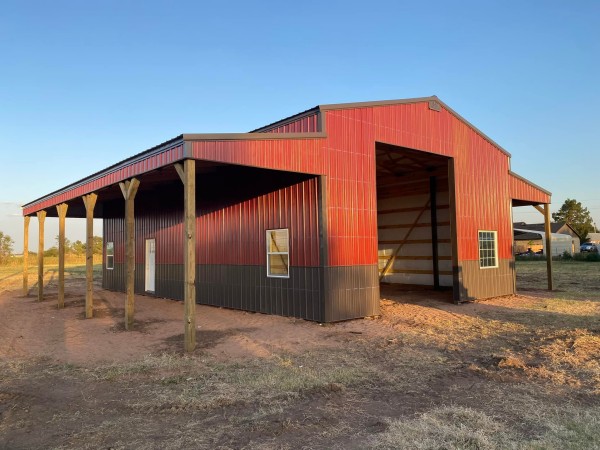
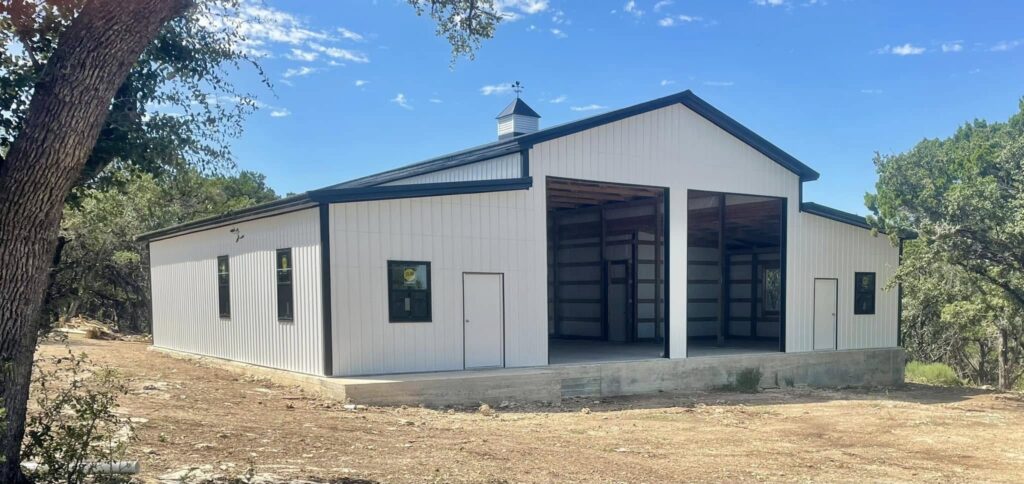
You’ve likely heard the term “pole barn.” It brings to mind a classic, sturdy structure on a farm, used for storing hay, equipment, or housing livestock. But if you’ve started researching building one yourself, you’ve probably also come across the phrase “post-frame construction.”
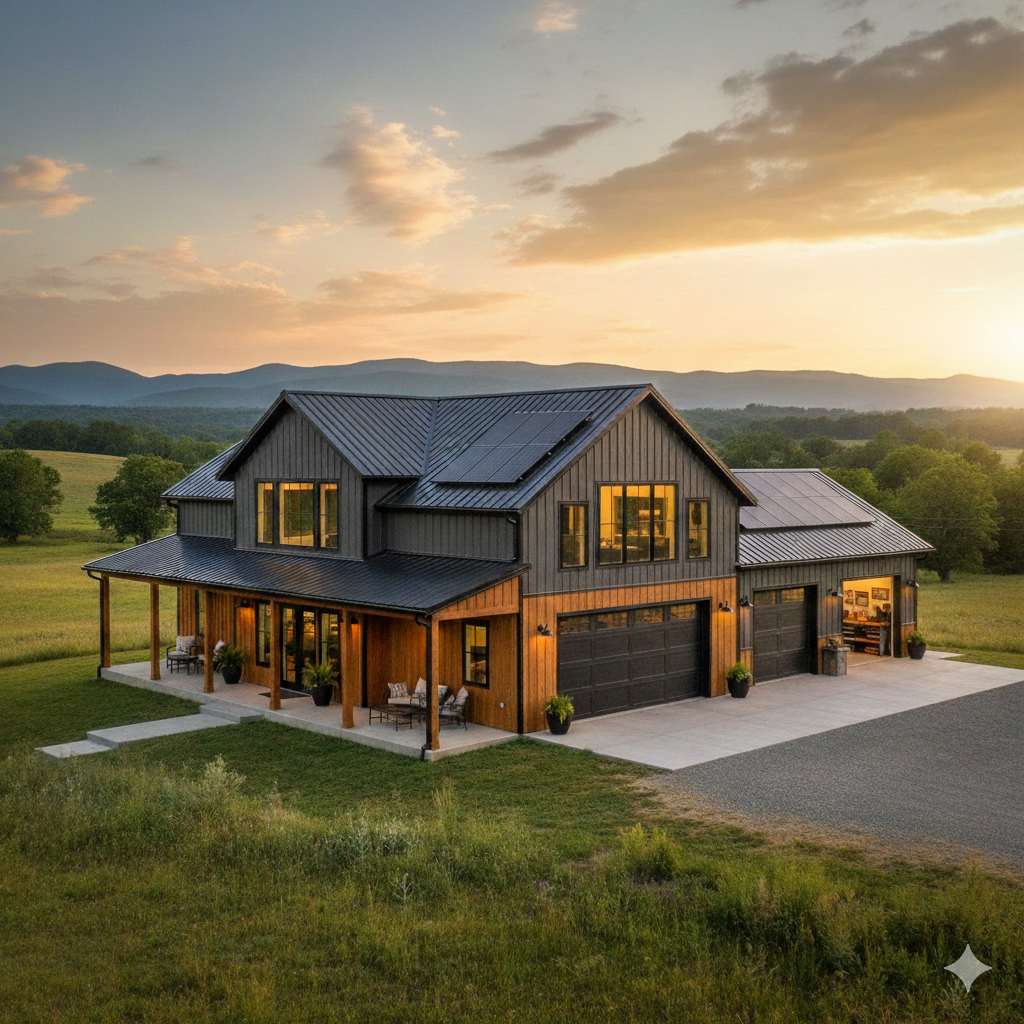
Are they the same thing? Is one better than the other? It can be confusing. Let’s clear up the terminology and take a quick trip through history to see how this building method became so popular.
The Simple Truth: It’s All About the Method
Here’s the simplest way to think about it: A pole barn is the type of building, while post-frame construction is the method used to build it.
Think of it like this: A “cake” is the final product, but “baking” is the method used to create it. You can bake many things, just as you can use post-frame construction to build many types of structures—from agricultural barns and garages to commercial warehouses and even modern homes (barndominiums!).
What is Post-Frame Construction?
At its core, post-frame construction is a highly engineered wood-framed building system. Instead of using studs placed every 16 or 24 inches like in traditional “stick-frame” housing, post-frame buildings rely on large, solid wood posts or laminated columns attached to a foundation or embedded directly into the ground.
These large posts are typically spaced 8 feet or more apart and serve as the main structural support for the building’s roof and walls. This creates an incredibly strong frame that transfers wind and snow loads directly to the ground.
Why is it called a “Pole Barn”?
Historically, these buildings were constructed using round, pressure-treated utility poles—the same kind used for telephone lines. These “poles” were buried in the ground to provide the structure’s foundation and main support. Hence, the name “pole barn.”
Today, while the name has stuck, the materials have evolved. Most modern “pole barns” are actually built with square, laminated wood columns which offer greater strength, straightness, and structural integrity than the round poles of the past.
A Quick History: From Ancient Roots to Modern Marvels
The concept of using large timbers to create a structural frame isn’t new. It’s a technique that has been around for millennia, with roots in ancient timber-frame construction found across the globe. Our ancestors understood that a few large, well-placed supports could create vast, open interior spaces.
However, the modern iteration of post-frame construction, the one that gave rise to the ubiquitous American “pole barn,” has a more recent and practical origin story that begins in the 1930s.
- The Depression-Era Innovation: During the Great Depression, farmers were in desperate need of affordable, easy-to-build structures. The traditional method of building timber-frame barns with complex joinery was too expensive and labor-intensive.
- The Perfect Storm of Materials: Around the same time, two key innovations became widely available: affordable, pressure-treated poles (thanks to the expanding rural electrification and telephone networks) and lightweight, corrugated metal sheeting for roofing and siding.
- A New Building Boom: Ingenious builders and farmers combined these materials. They found they could quickly erect a sturdy building by burying the treated poles in the ground and cladding the frame with metal sheets. This “pole building” method was faster, cheaper, and required less skilled labor than traditional methods.
From those humble beginnings as a cost-effective solution for struggling farmers, post-frame construction has evolved significantly. Decades of engineering advancements have transformed it into a highly sophisticated building method. Today’s post-frame buildings are energy-efficient, durable, and incredibly versatile, used for everything from simple storage sheds to elaborate commercial centers and beautiful custom homes.
So, the next time you see a “pole barn,” remember that you’re looking at a modern example of a time-tested, highly engineered building method with a history rooted in practical innovation.